Coffee Roast Date & Freshness: Staying Dialed In as Beans Age
Coffee changes after roasting, but there is no single freshness window for every bag. Roast style, packaging and storage all affect when a coffee settles and how its espresso recipe drifts.
What changes after roasting
Roasted coffee releases carbon dioxide while oxygen and moisture gradually change its aroma and brewing behavior. The pace varies with roast development, bean density, packaging and storage.
- The first days: Some coffees release enough gas to make espresso flow and crema less stable.
- After a suitable rest: Flow often becomes easier to repeat and the cup more open. The roaster's guidance is the best first reference.
- As the bag ages: Aroma can fade and the same recipe may begin to run faster or taste leaner.
Common day ranges are useful observations, not a universal schedule. Compare how the coffee behaves rather than rejecting or approving it by date alone.
Why a dialed-in recipe can drift
Changes in gas, moisture and the environment can alter puck resistance. A shot may reach the same yield faster than it did earlier in the bag, but age is only one possible cause. Dose, humidity, grinder retention and puck preparation can produce a similar shift.
When the pattern repeats, make a small grind adjustment and compare the result. Do not force the shot back to an old time if the cup already tastes balanced.
Keep the recipe and the age adjustment separate
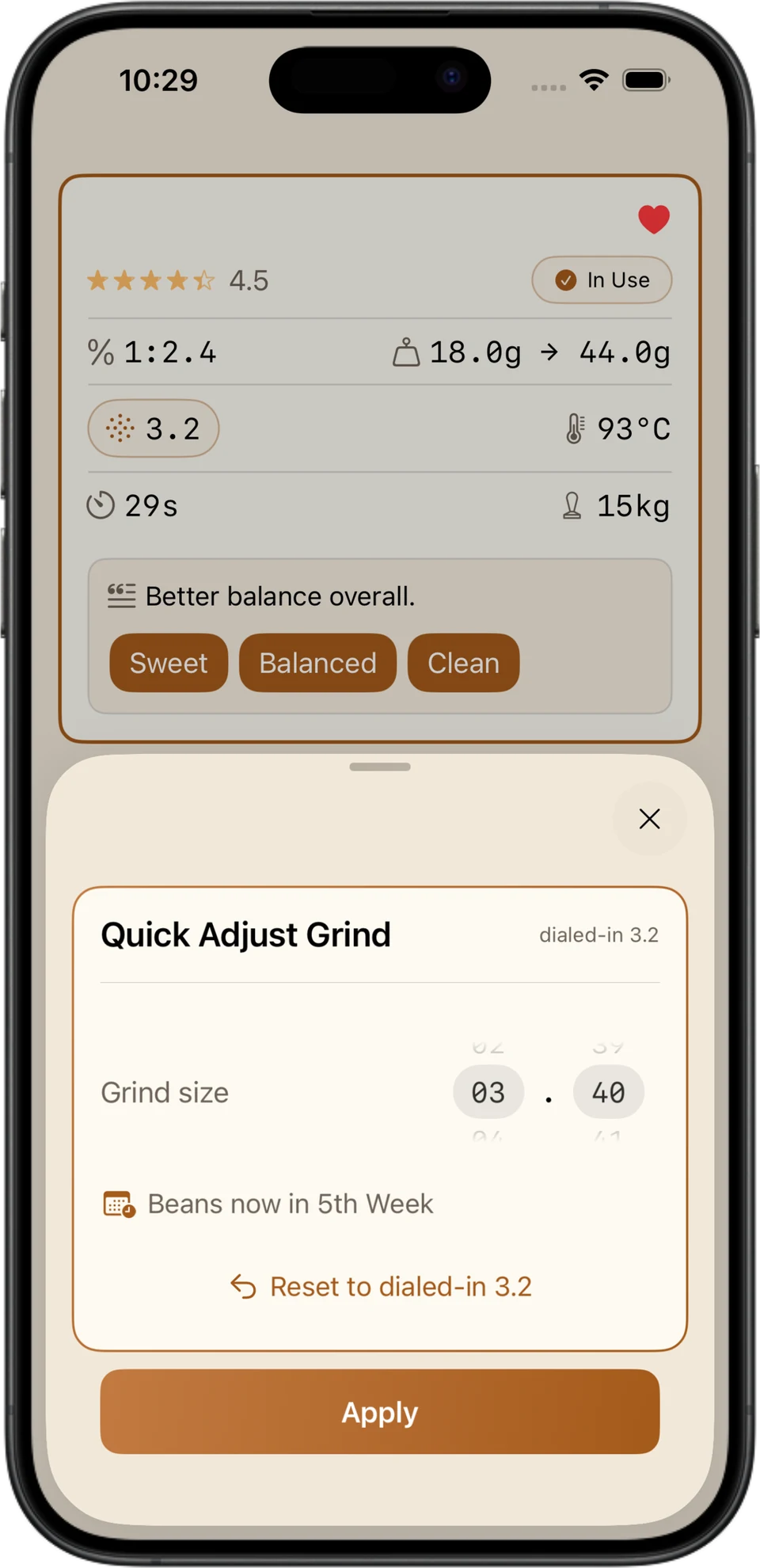
If you overwrite the original recipe every time the bag changes, you lose the reference for a fresh purchase of the same coffee. Keep the Dialed In setting intact and record the current grind adjustment separately.
Storage that preserves the coffee
- Limit air, heat and light. Close the original bag carefully or use a suitable airtight container.
- Keep the routine stable. Store the coffee in a cool, dry place away from changing heat and moisture.
- Freeze longer-term portions well sealed. Divide them before freezing, and avoid repeated condensation from opening the same cold container.
- Buy at a useful pace. Choose a bag size that matches how quickly you brew.
Use the roast date as context
Save the roast date with the coffee. It helps explain whether an unstable first dial-in may need more rest and whether later flow changes may be age-related. A bag without a roast date gives you less context, so the shot history becomes even more important.