Espresso Ratio Explained: Dose, Yield & the 1:2 Rule
Brew ratio connects the dry coffee in the basket to the espresso in the cup. It gives every recipe a comparable starting point, even when the dose changes.
What is an espresso brew ratio?
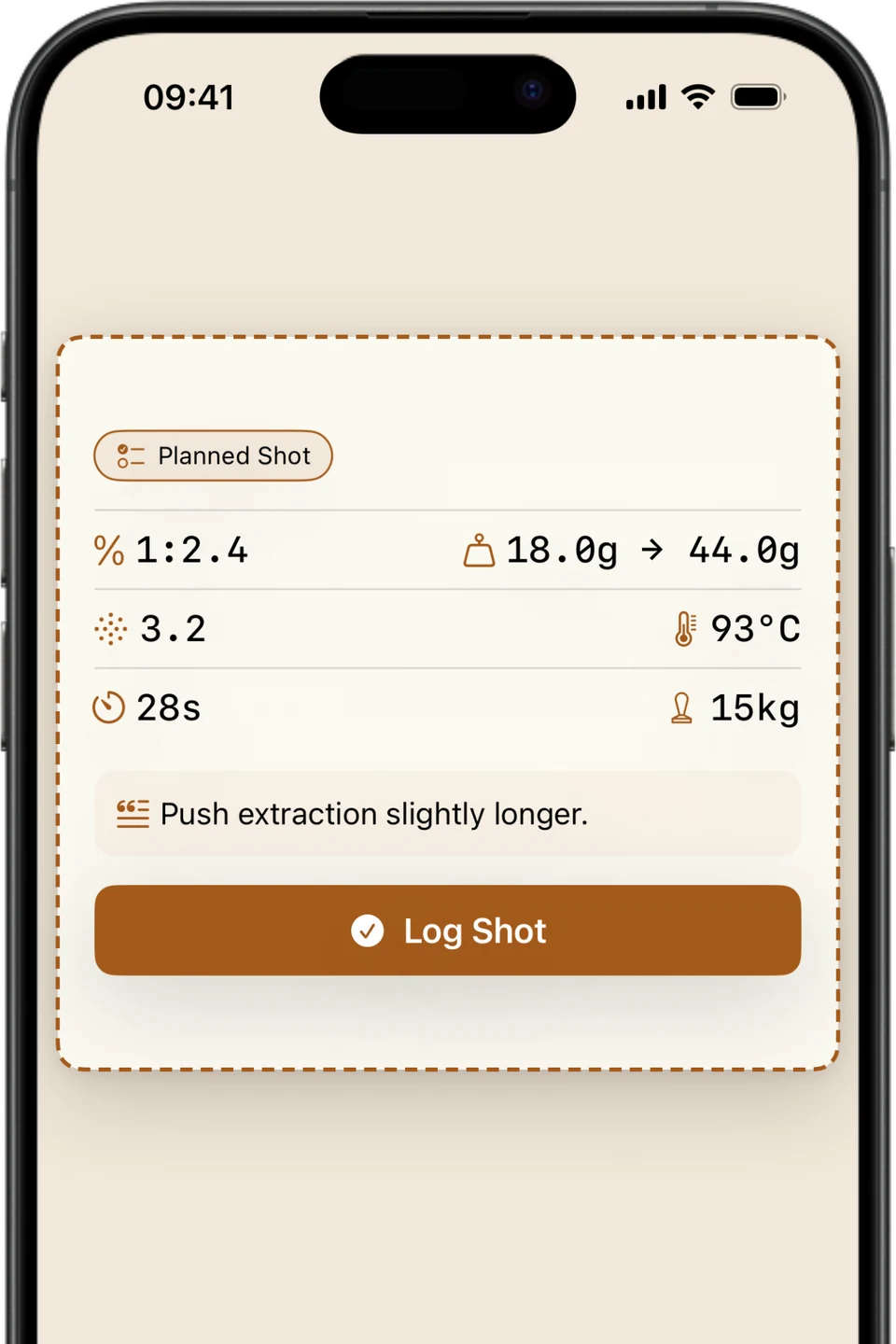
The ratio compares the weight of dry grounds in the basket with the weight of espresso in the cup. An 18g dose pulled to a 36g yield is 1:2. Use weight rather than volume because crema changes how a shot looks without changing its mass.
Common espresso ratios
| Style | Typical ratio | Example with 18g | Common character |
|---|---|---|---|
| Ristretto | 1:1 to 1:1.5 | 18g → 18–27g | Concentrated, with more body |
| Espresso | 1:1.5 to 1:2.5 | 18g → 27–45g | A broad range for balancing body and clarity |
| Longer espresso | 1:2.5 to 1:3+ | 18g → 45–54g+ | Lower strength and potentially higher extraction |
The ratio makes recipes comparable across dose sizes. A 17g to 34g shot and a 20g to 40g shot are both 1:2, even though they suit different baskets.
Choose a starting ratio by roast
- Light roasts often benefit from a longer ratio that makes extraction easier and opens more clarity.
- Medium roasts often provide a forgiving reference near 1:2.
- Dark roasts often suit a shorter ratio that preserves concentration without emphasizing roast bitterness.
These are starting directions, not fixed recipes. Process, age, equipment and personal preference can all move the useful range.
Ratio, time and grind describe different things
Ratio defines how much espresso you produce from the dose. Grind size changes flow resistance and extraction conditions. Time records how the shot behaved. Keeping them together makes the result easier to repeat and the next adjustment easier to interpret.
When to adjust ratio instead of grind
Yield changes strength and extraction together. If a shot is balanced but too concentrated, a slightly longer yield may help. If it is balanced but too dilute, a shorter yield may suit it. When the cup is sharply sour, dry, bitter or uneven, consider grind, temperature and puck prep as well. The Espresso Compass workflow helps separate these directions.