How to Dial In Espresso: A Step-by-Step Guide
Dialing in means finding a repeatable recipe for one coffee on one setup. This workflow keeps the dose stable, uses time as a diagnostic, and lets taste guide the next adjustment.
What dialing in actually means
Each coffee behaves differently as roast, process, age and your equipment change the way it extracts. Dialing in is the controlled process of finding the dose, yield, grind and temperature that make this coffee taste the way you want, then keeping enough context to repeat it.
Step 1: Hold the dose steady
Choose a dose that fits your basket and leaves suitable headspace. An 18g dose is a useful example, not a universal target. Weigh it consistently and avoid changing it while you evaluate the other variables.
Step 2: Choose a starting ratio
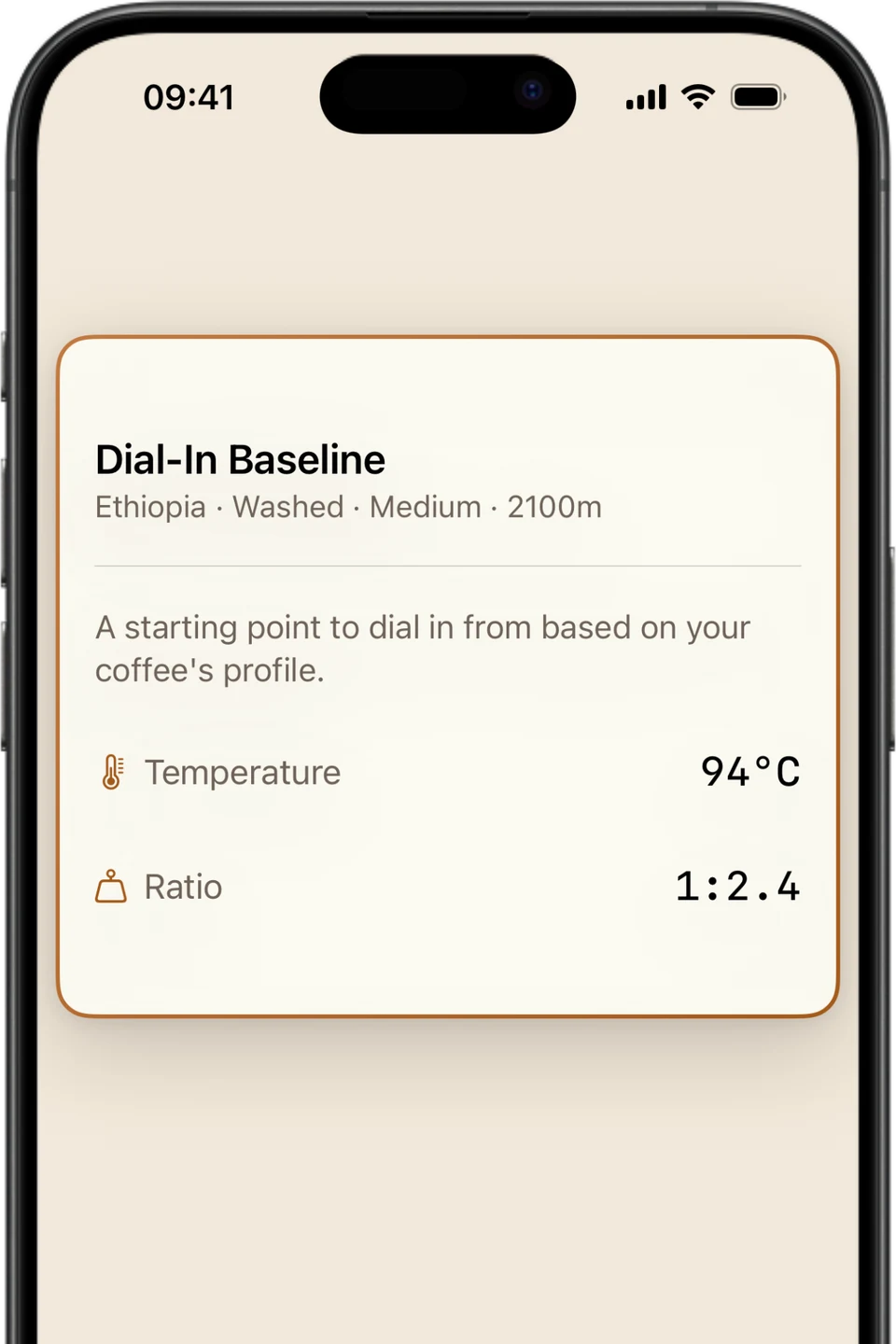
A 1:2 brew ratio, such as 18g in and 36g out, is a practical reference for many coffees. Roast and taste may lead you shorter or longer. Read the full espresso ratio guide, and stop the shot on yield rather than waiting for a target time.
Step 3: Pull a reference shot
Prepare the puck consistently, pull the shot, and note the actual yield, time and taste. The first shot is a reference. It tells you how this coffee and recipe behave on your setup.
Step 4: Choose one move
| What you notice | Likely direction | First move to test |
|---|---|---|
| Sharp or sour, with a faster flow than your reference | More extraction may help | Try a slightly finer grind |
| Dry or harsh, with a slower flow than your reference | Less extraction may help | Try a slightly coarser grind |
| Sour and bitter in the same cup | Extraction may be uneven | Improve distribution and puck prep |
| Balanced but too concentrated | The shot may be too strong | Try a slightly longer yield |
| Balanced but too dilute | The shot may be too weak | Try a slightly shorter yield |
Change one variable, pull again, and compare the cups. The useful question is not whether a number looks correct. It is whether that deliberate change improved the taste.
Step 5: Save the recipe and the path to it
When the cup is where you want it, save the grind setting, dose, yield, time, temperature and taste. That becomes a starting reference for the same coffee and a record you can adjust as the beans age. A useful espresso shot log preserves both the winning recipe and the comparisons that led there.
Common dialing-in mistakes
- Changing several variables at once. You lose the connection between the adjustment and the result.
- Chasing time instead of taste. A familiar time range is a reference, not the goal.
- Ignoring grinder retention. Purge enough after a grind change for the next shot to reflect the new setting.
- Dialing before the coffee has settled. Very fresh beans can behave less consistently, and different coffees need different rest periods.
- Relying on memory. Record the recipe while the taste and adjustment are still clear.