How to Keep an Espresso Shot Log (What to Track & Why)
A shot log turns each pull into a comparison you can use later. The goal is not more data. It is a clear record of the recipe, the result and what you changed next.
Why a shot log beats memory
Dialing in is a sequence of comparisons. A useful record keeps three things connected: what you intended to brew, what the machine and puck produced, and how the cup tasted.
- Return to a known coffee with context. The previous recipe gives you a starting reference without pretending the new bag will behave identically.
- Diagnose with the full shot. Sourness means more when it sits beside dose, yield, time, grind and notes about flow.
- Learn your own setup. Repeated records reveal which ranges tend to work for your grinder, machine, water and palate.
What to track
| Variable | Priority | Why it matters |
|---|---|---|
| Dose | Essential | Anchors the recipe and ratio |
| Yield | Essential | Defines the brew ratio with dose |
| Shot time | Essential | Records flow and helps reveal drift |
| Grind setting | Essential | Preserves the setting for your grinder |
| Taste and rating | Essential | Explains whether the recipe worked for you |
| Water temperature | Useful | Important when the machine allows adjustment |
| Roaster, roast date, origin and process | Once per coffee | Adds context for the starting point and later comparisons |
| Preparation notes | As needed | Useful when distribution, basket or pressure changes |
Keep the record light enough to use consistently. Save stable information once per coffee, then focus each shot entry on what changed and what happened.
Organize the log around each coffee
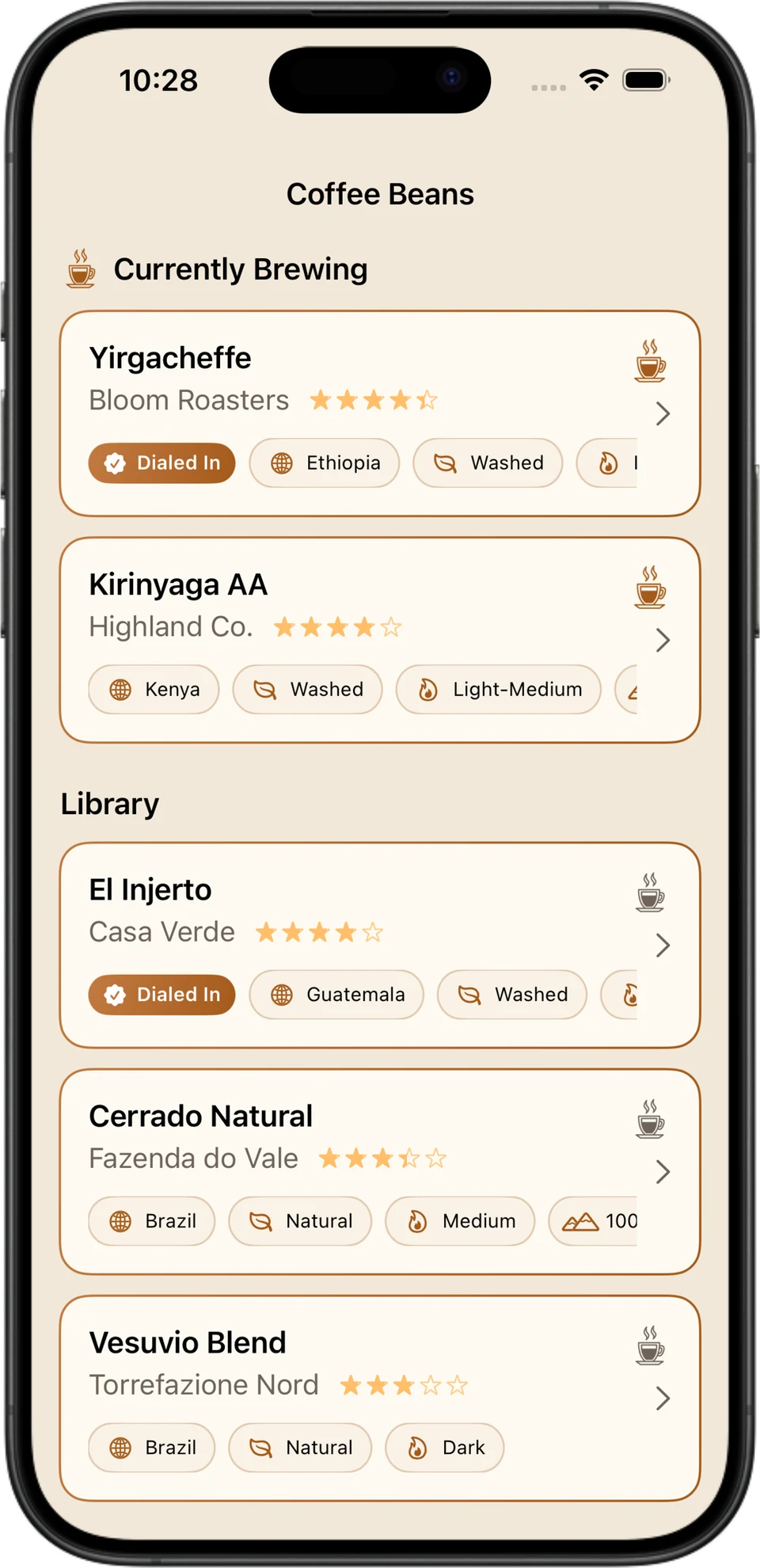
Each bag should hold its own shot history, Dialed In recipe and notes about how it changed with age. That structure is easier to reuse than a chronological list with several coffees mixed together.
Paper, spreadsheet or app?
- Paper is immediate and flexible, but harder to search or compare over time.
- A spreadsheet is powerful, though entering and organizing shots at the machine takes more setup.
- A dedicated app can calculate ratios, group shots by coffee and keep the winning recipe distinct from the experiments around it.
Build the habit around the shot
Plan the target before brewing, then record the actual result while the taste is still clear. During dial-in, log every deliberate comparison. Once the coffee is stable, return when the recipe drifts or you test a meaningful change.