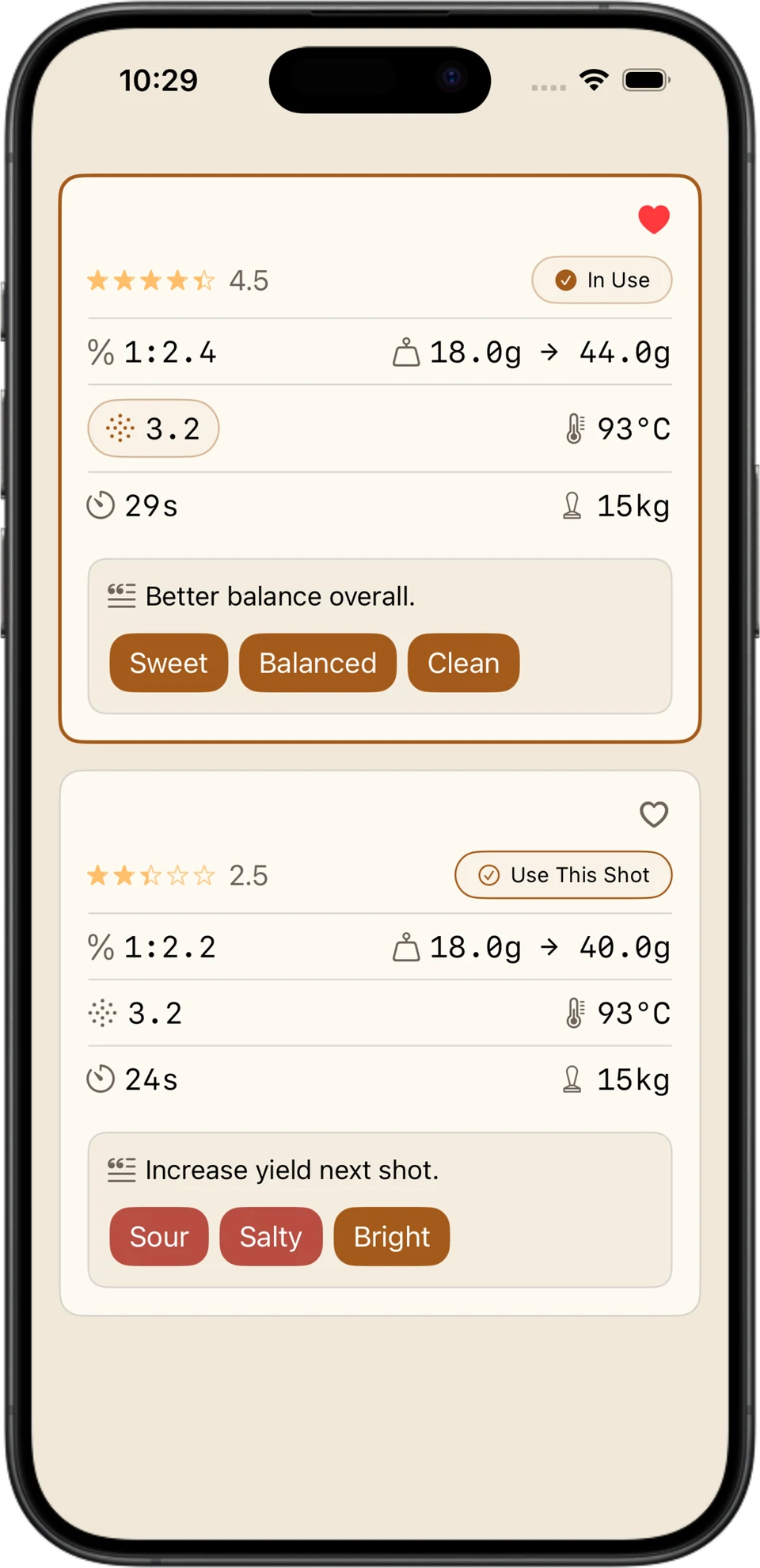
Why Does My Espresso Taste Sour? How to Diagnose It
Sharp sourness often points toward under-extraction, but shot time, channeling and the coffee's intended acidity all matter. Diagnose the whole cup before changing the grinder.
Why sourness often points to under-extraction
Early extraction tends to emphasize acids before enough sweetness and balance develop. When water moves too quickly or unevenly through the puck, the result can taste sharp, thin, salty or grassy. That pattern is a clue, not a diagnosis from one word. A bright coffee can carry deliberate acidity without being under-extracted.
Four places to look
1. Grind and flow
If the shot reaches the target yield much faster than your normal reference and tastes sharply sour, try a small move finer. Purge enough retained coffee for the next shot to reflect the new setting.
2. Yield
A longer yield can increase extraction while reducing strength. If the shot is concentrated as well as sour, extend the ratio slightly and compare the result. See the espresso ratio guide.
3. Brew temperature
More heat can help dense, light-roasted coffee extract, provided your machine is fully stable. Use temperature as a deliberate adjustment after checking grind, yield and puck prep.
4. Uneven extraction
Sourness and bitterness in the same cup can point to channeling. Improve distribution, tamp level and basket fit before making the grind finer, since extra resistance may make uneven flow worse.
A controlled way to adjust
- Keep dose and puck preparation steady.
- Choose one move based on the full shot: grind, yield or temperature.
- Pull again and record actual yield, time and taste.
- Compare the cups. Keep the move only if sweetness and balance improve.
Shot time helps interpret the result, but it does not confirm extraction on its own. A familiar time can still hide channeling, and an unusual time can still produce a balanced cup.
Still sour after grinding finer?
- Light roast? Try a longer ratio or a modest temperature increase rather than continuing finer into channeling.
- Very fresh coffee? Some coffees need more rest before flow becomes stable. Use the roaster's guidance and compare behavior over several days.
- Sour or bright? Pleasant acidity usually arrives with sweetness and a clear fruit character. Under-extracted sourness tends to feel sharp, thin or abruptly drying.