The Espresso Compass: From Taste to Your Next Shot
The Espresso Compass gives a sour, bitter, weak or overwhelming shot a direction. A shot log keeps the reading, the recipe and the next move together so the same lesson survives beyond one cup.
What the Espresso Compass actually maps
Barista Hustle's Espresso Compass places flavor on two connected axes: extraction, meaning how much material water dissolved from the coffee, and strength, meaning how concentrated the espresso is.
That is more useful than a chart that says sour means grind finer and bitter means grind coarser. Yield changes extraction and strength together. Grind and puck evenness can move the whole extraction pattern. The Compass helps you decide which kind of move the cup needs.
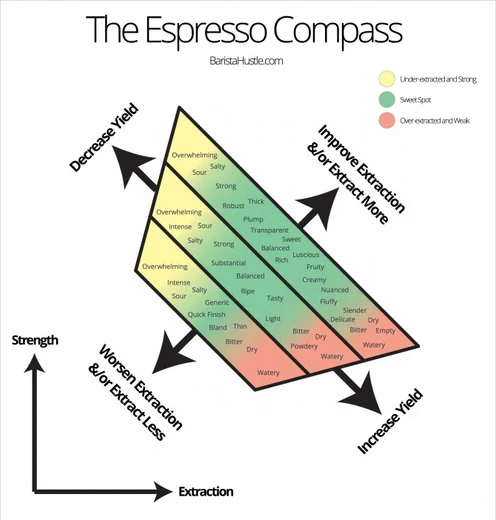 Open the original Espresso CompassUse Barista Hustle's free graphic beside this workflow. Their article explains why the compass sits across extraction and strength.baristahustle.com ↗
Read the cup before touching the grinder
| What you notice | What it may mean | A useful first move |
|---|---|---|
| Sour, salty, sharp, with little sweetness | Under-extracted | Increase yield to extract more, or improve extraction with a finer grind when flow and evenness allow |
| Bitter, hollow or drying | Over-extracted, or an uneven shot showing harshness | Reduce yield first, then inspect puck prep if sourness and bitterness appear together |
| Balanced in flavor but thin | Too weak | Reduce yield to make the espresso stronger |
| Balanced but heavy or overwhelming | Too strong | Increase yield to lower strength |
| Sour and bitter in the same sip | Uneven extraction or channeling | Improve distribution and tamp before making the grind finer |
These are directions, not diagnoses from a single word. Sourness can be a deliberate part of a bright coffee. Bitterness can come from roast character. Use the whole cup, the shot behavior and your own preference.
Why yield and grind are different moves
Barista Hustle describes each slice of the Compass as the flavors you can move through by changing yield. More yield makes the shot weaker and more extracted. Less yield makes it stronger and less extracted.
Moving to a different slice requires a change in extraction and evenness. Grind can help, but finer is not always better. If finer grinding causes channeling, the cup can taste sour and bitter at once. Better distribution and a level tamp may be the move that creates a wider sweet spot.
The Espresso Compass workflow in Espresso Metrix
- Plan a stable starting shot. Keep dose fixed and enter the ratio, yield, temperature and grind you intend to use.
- Pull the shot and log the actual result. If the yield or time missed the plan, record what happened rather than copying the target.
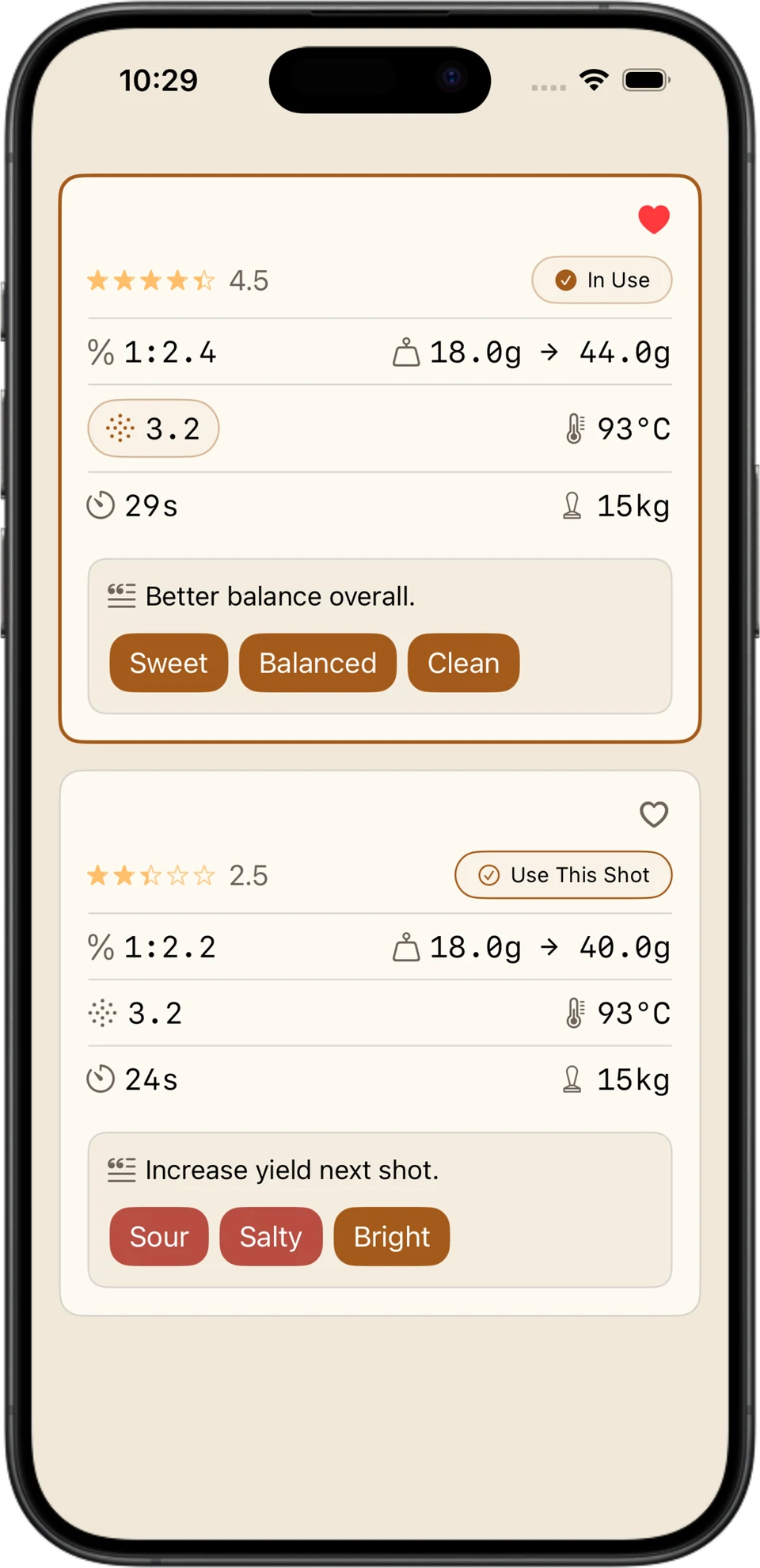
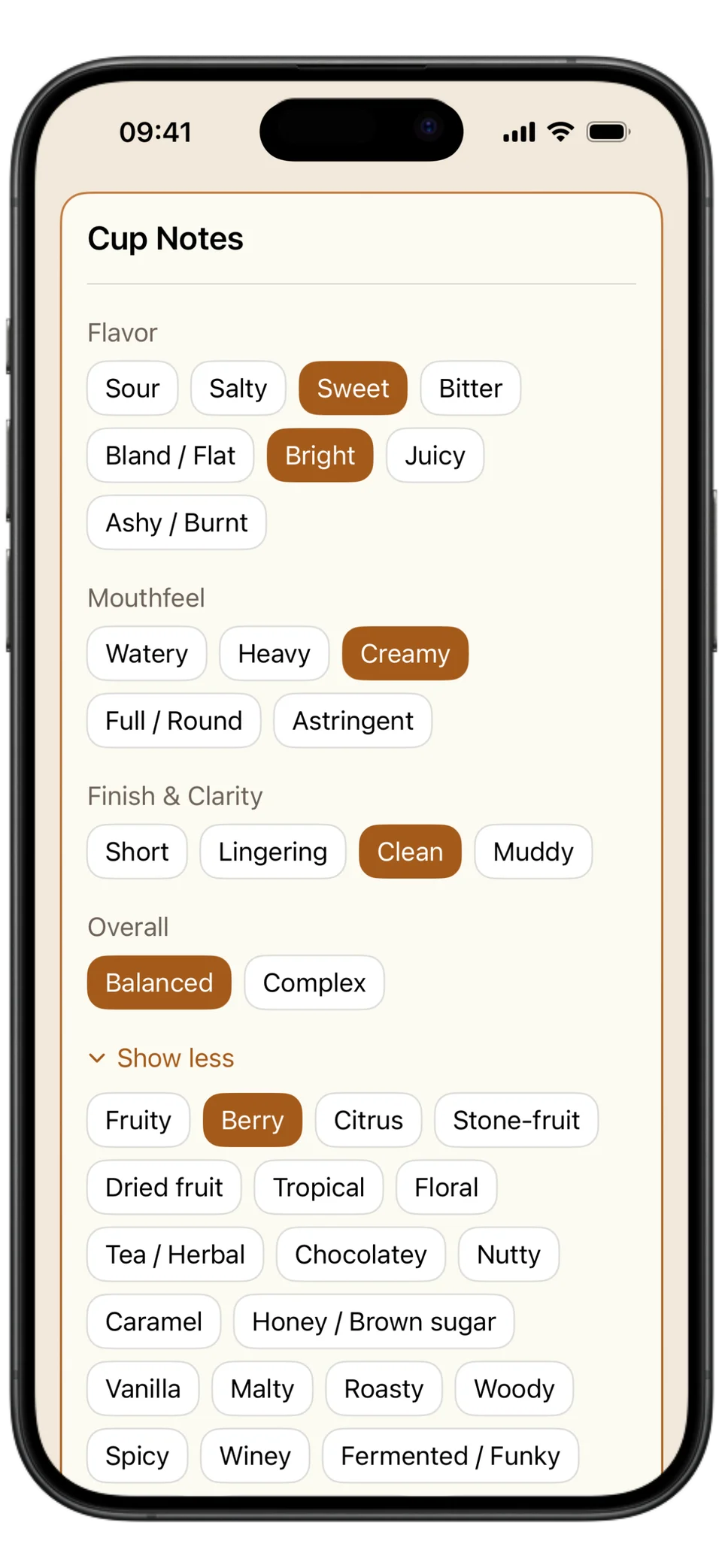
- Taste, then choose the closest tags. Sour, Salty, Bright, Sweet, Balanced and Clean give the compass reading a permanent home beside the recipe.
- Choose one move from the Compass. Change yield, grind or puck preparation. Put that decision into the next planned shot.
- Compare the next cup with the previous one. Keep the move when taste improves. Reverse it or choose a different axis when it does not.
- Mark the winner Dialed In. The useful result is the recipe that produced the cup you prefer, not a number that looks correct.
An example: sharp, bright and thin
Suppose an 18g dose produces 36g in the cup. The shot tastes sharp and thin. In Espresso Metrix, log the actual recipe and tag the taste before changing anything.
The Compass suggests that you need more extraction. Plan the next shot at a slightly longer yield, such as 40g, while keeping dose, grind and temperature fixed. If sweetness appears and the cup gains clarity, keep moving carefully in that direction. If the longer shot becomes weak without gaining sweetness, return to the earlier ratio and try a small grind or puck-prep adjustment instead.
The value of the log is the comparison. You can see which variable moved, what actually happened and whether the taste improved. That is how a useful diagram becomes a repeatable dial-in method.