How to Taste Espresso While Dialing In
A dial-in only improves when the cup tells you what changed. A repeatable tasting routine separates what you perceive from what you prefer, then turns the comparison into one deliberate next move.
Taste for a decision, not a perfect description
During dial-in, tasting has a practical job: decide whether the last change moved the coffee closer to the cup you want. You do not need to identify a rare fruit note. Broad observations such as sharper, sweeter, thinner, more drying or cleaner are often more useful because they make two shots easier to compare.
Describe the cup before deciding whether you like it
The Specialty Coffee Association's Coffee Value Assessment separates sensory description from preference. That distinction works well at the espresso machine: first record what is present, then decide how well that profile suits you.
| Question | What to record | Why it helps |
|---|---|---|
| What do I perceive? | Acidity, sweetness, bitterness, texture and finish | Describes how the shot changed |
| Do I prefer it? | A rating and a short reason | Identifies which result should become the new reference |
A bright, light-bodied espresso can be accurately described by two people who prefer it differently. Your rating is not a verdict on the coffee. It records whether the cup fits your palate.
Use the same tasting routine for every comparison
- Stir the espresso. Stir gently so both shots are mixed consistently.
- Let it reach a comfortable temperature. Very hot espresso can hide detail. For a fair comparison, give both shots a similar amount of cooling time.
- Take a small first sip. Notice the immediate balance of strength, acidity and bitterness.
- Taste again for texture and finish. Look for sweetness, mouthfeel and what remains after the sip.
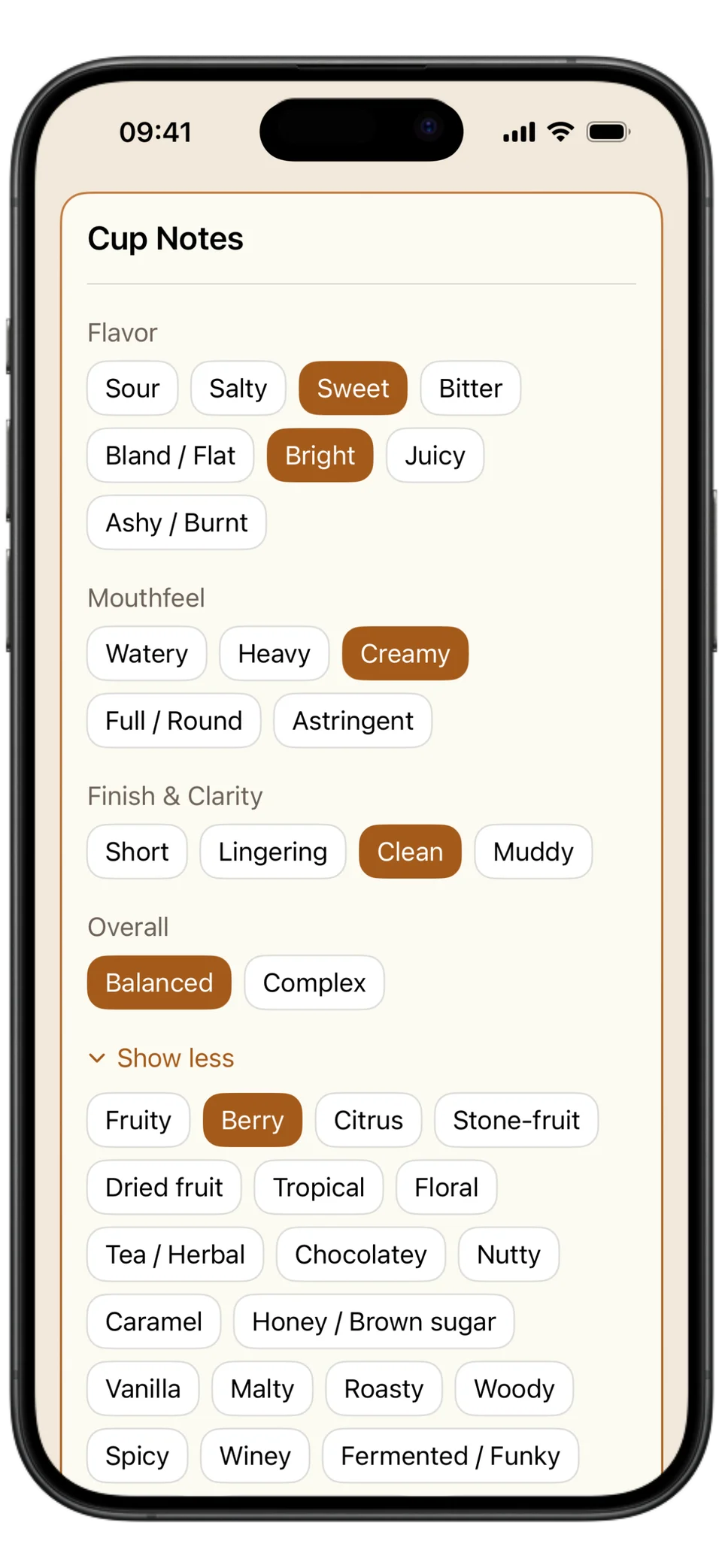
- Describe, then rate. Choose broad taste tags, add one specific note and decide which cup you prefer.
La Marzocco's espresso tasting guide also emphasizes comparative tasting, note-taking and changing one variable at a time. The exact routine matters less than using the same routine for both cups.
Read the cup in five parts
| Dimension | Useful language | What to ask |
|---|---|---|
| Acidity | Juicy, bright, sharp, sour, flat | Does it add clarity and energy, or dominate the cup? |
| Sweetness | Round, caramel-like, fruit-like, muted | Is there enough sweetness to support the acidity and bitterness? |
| Bitterness | Cocoa-like, roasty, harsh, ashy | Does it add structure, or leave the cup hollow and unpleasant? |
| Mouthfeel | Thin, silky, syrupy, rough, drying | How does the espresso feel while you drink it? |
| Finish | Clean, lingering, short, hollow, astringent | What remains after the espresso leaves your mouth? |
Start broad, then add detail. A note such as bright and silky is easier to compare than a forced flavor description you are unsure about.
Compare shots at a similar temperature
Espresso changes quickly as it cools. A fresh, hot shot compared with an older, cooler shot is not a clean test. Taste the reference and new shot close together when practical, or follow the same cooling routine for each.
Ask one narrow question: did the deliberate change improve the problem you were trying to solve? A finer grind may bring more sweetness but also more dryness. A longer yield may reduce sharpness while making the cup too dilute. Record the tradeoff instead of forcing the result into good or bad.
Turn the taste into one next move
| What you notice | What it may suggest | Move to consider |
|---|---|---|
| Sharp, sour and thin | More extraction may help | Try a slightly longer yield or finer grind when flow is even |
| Dry, harsh or hollow | Less extraction may help, or roast character may dominate | Try a shorter yield, coarser grind or lower temperature, one at a time |
| Balanced but too thin | The espresso may be too weak | Try a shorter yield |
| Balanced but too intense | The espresso may be too strong | Try a longer yield |
| Sour and bitter together | Extraction may be uneven | Check puck preparation before changing the recipe |
These are directions, not automatic diagnoses. Use the full shot behavior and the Espresso Compass before choosing the next plan.
Keep broad tags and one specific note
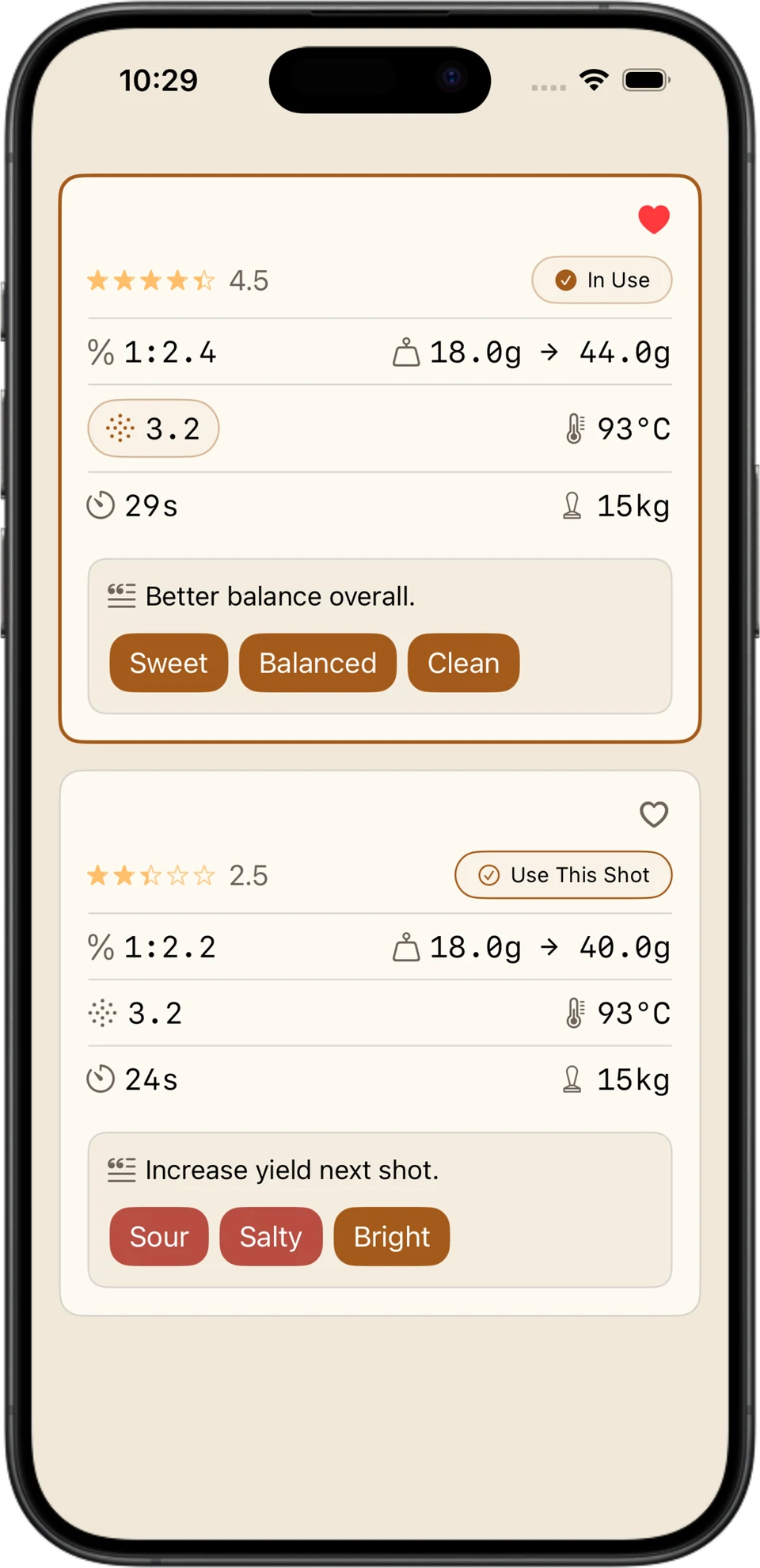
Broad tags make the history easy to scan. A short note preserves the nuance: more peach, less drying. Bright at first, sweeter as it cooled. Good body, harsh finish. One useful sentence is enough.
Do not chase every tasting note on the bag
Roaster notes describe a sensory direction, not a list your espresso must reproduce. Water, grinder, recipe and serving temperature all affect what reaches your cup. Use the notes as context, then describe what you actually perceive.
The goal is not to name every flavor. Notice what changed, decide whether you prefer it and use that evidence to plan the next shot.