How to Compare Espresso Shots Without Losing the Thread
Dialing in gets confusing when the plan, the shot and the taste blur together. A controlled comparison keeps one question in focus, shows what really changed and turns the better cup into a recipe you can repeat.
Why planned and actual shots are different
An espresso recipe is an intention. The shot in the cup is evidence. You may plan 18g in and 40g out, then stop at 41.5g. The grinder may retain coffee, the machine may run hotter than expected or the puck may channel. If your log only copies the plan, the comparison starts from false information.
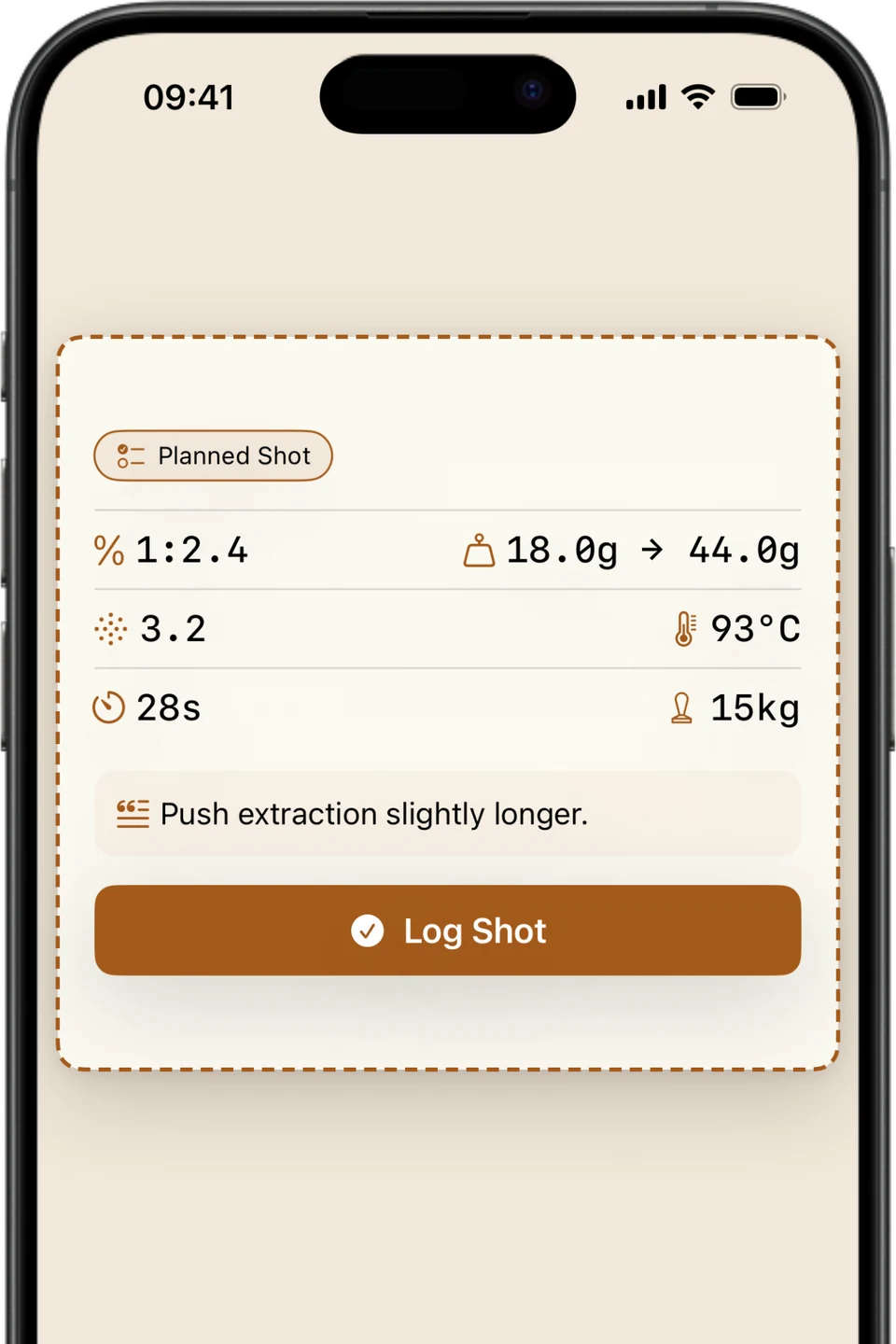
Espresso Metrix separates the two on purpose. A planned shot holds the next recipe you want to try. Logging the shot records what actually happened. That gap is often where the useful diagnosis lives.
Start with one question
A good comparison is built around a question the next cup can answer:
- Will a slightly finer grind bring more sweetness?
- Will a longer ratio calm this sharp acidity?
- Will a lower temperature soften roast bitterness?
- Was the bad cup caused by the recipe, or did the puck channel?
Pick one. If you change grind, temperature and yield together, a better cup tells you nothing about which move helped. Some measured values will change as a consequence. A finer grind may increase shot time. That is still one deliberate adjustment.
The one-change comparison loop
- Choose the reference shot. Use the most recent clean, evenly extracted shot, even if the taste is not there yet.
- Name the problem in the cup. Add taste tags and a short note that you will understand later, such as sharp at the front, sweet finish.
- Plan one deliberate change. Set the next target before brewing. Leave the other controllable variables alone.
- Pull, then record the actual shot. Log the real dose, yield, time, grind and temperature. Note visible channeling or a preparation mistake.
- Taste against the reference. Ask whether the specific problem improved, not whether the numbers look more correct.
- Keep, reverse or refine. A clear improvement becomes the new reference. A worse cup sends you back. A mixed result suggests a smaller move.
What to hold steady
| When testing | Change | Hold steady | Watch |
|---|---|---|---|
| Extraction through flow | Grind setting | Dose, target yield, temperature, puck prep | Actual time, flow and taste |
| Strength and balance | Target yield or ratio | Dose, grind, temperature, puck prep | Body, clarity, acidity and bitterness |
| Heat response | Temperature | Dose, ratio, grind, puck prep | Sweetness, roast bitterness and sharpness |
| Evenness | Distribution or tamp technique | The full recipe | Channeling and mixed sour-bitter taste |
Dose is usually best fixed to the basket while dialing in. Change it when headspace or basket capacity is the problem, not as a casual correction for every shot.
How to taste a comparison
Taste the reference and the new shot close together when practical. Espresso changes as it cools, so give both cups a similar amount of time. A small spoonful from each is enough.
Use taste tags for the fast comparison, then add one sentence for nuance. Sweet and Balanced may both be true, but a note such as more peach, less drying tells you why the second shot won. Ratings help you scan the history later, while notes explain the decision.
When the comparison is invalid
Do not blame the planned change when the second shot had obvious channeling, a different dose or a missed yield. Log it, note what went wrong and repeat the plan. A failed execution is useful evidence, but it is not a fair taste comparison.
The same applies after a grind change if retained grounds from the previous setting remain in the grinder. Purge enough coffee for your grinder before treating the next shot as a clean test.
Know when to stop
You are dialed in when the cup tastes good to you and repeats reliably. Mark that shot Dialed In. It becomes the coffee's reference recipe, while the experiments remain in the history that explains how you reached it.
More adjustments do not automatically produce a better espresso. Once the cup is enjoyable, brew it again. Consistency is the final comparison.