Espresso Grind Size: When to Grind Finer or Coarser
Grind size changes puck resistance, flow and extraction. The useful move depends on how the shot ran and tasted, not on time or taste alone.
What grind size changes
Finer grinding usually increases resistance and exposed surface area. Coarser grinding usually reduces resistance. The effect depends on the grinder, coffee and puck preparation, so treat shot time as evidence of what changed rather than a target to force.
Finer or coarser?
| What you observe | What it may suggest | Move to test |
|---|---|---|
| Faster flow with a sharp, thin cup | More extraction or resistance may help | Grind slightly finer |
| Slower flow with a dry, harsh cup | Less resistance may help | Grind slightly coarser |
| Uneven flow with sourness and bitterness | The puck may be channeling | Improve distribution and tamp first |
Use the sour espresso and bitter espresso guides when the taste does not match the simple flow pattern.
How large should one adjustment be?
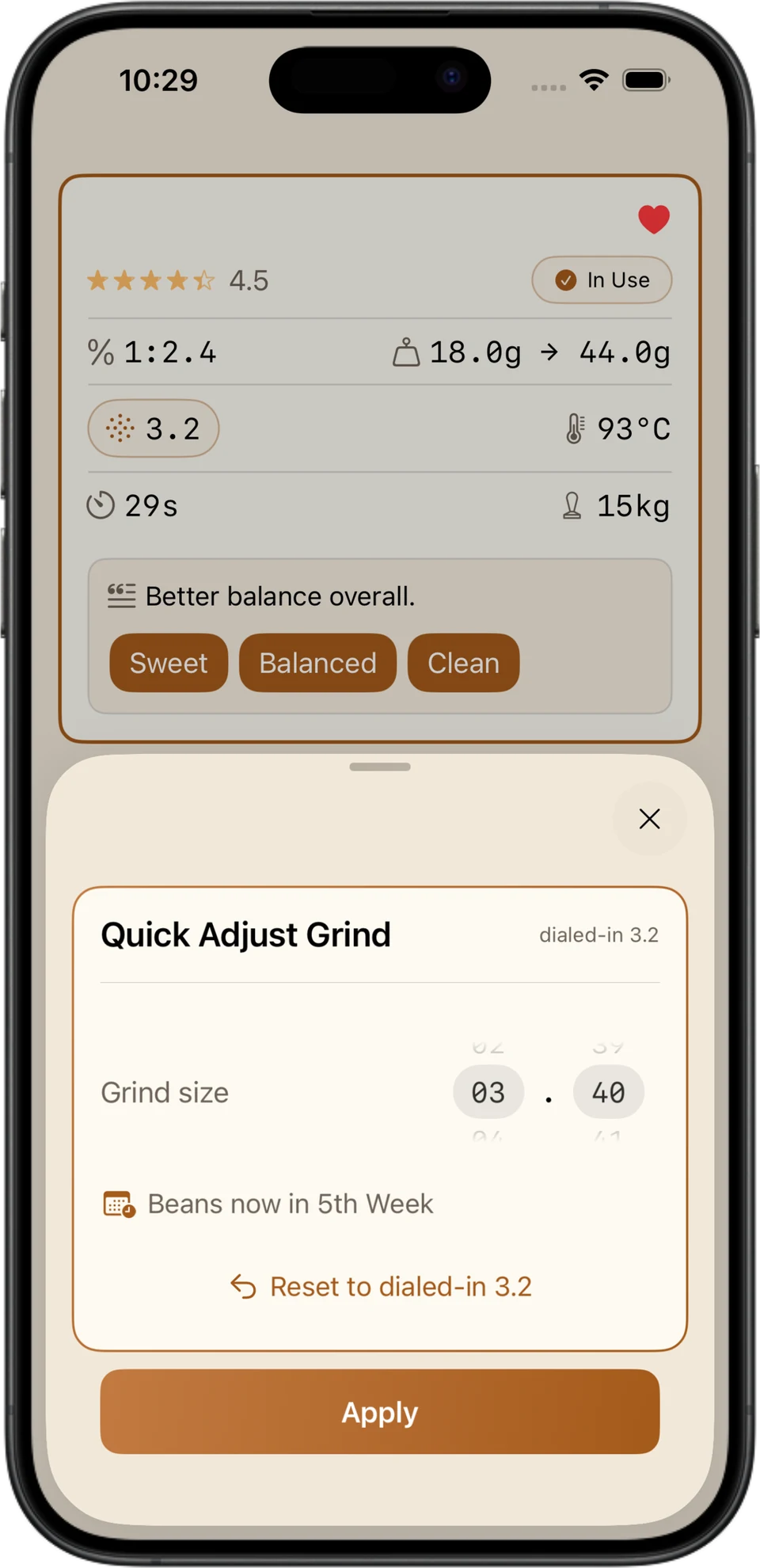
Use the smallest move your grinder can repeat, then measure the effect. One numbered step can be subtle on one grinder and dramatic on another. Avoid aiming for a fixed number of seconds per step until your own shot history shows how the grinder responds.
After changing the setting, purge enough retained coffee for the next dose to represent the new position. The amount depends on the grinder and workflow.
Each coffee needs its own setting
Roast, density, process, age and burr behavior can all move the useful grind range. Settings also do not translate reliably between grinder models or even every unit of the same model. Save the setting with that coffee on that grinder rather than treating it as a universal recipe.
Why the same setting can drift
As coffee ages, changes in gas and moisture can alter flow. Humidity, burr temperature, dose and puck preparation can also move the result. When a familiar recipe shifts, compare several shots before assuming the grinder alone is responsible. The freshness guide covers how to adjust without losing the original recipe.