Espresso Brew Temperature: Set It by Roast, Then Leave It
Brew temperature changes extraction, but its effect only makes sense beside roast, ratio, grind and taste. Set a stable starting point, then move it deliberately.
What brew temperature changes
Hotter water generally increases extraction, while cooler water reduces it. Within the working range for espresso, grind, ratio and puck evenness may still create larger changes in the cup. Temperature works best as a stable part of the recipe rather than a number chased after every shot.
Starting temperatures by roast
| Roast | Starting range | General direction |
|---|---|---|
| Light | 94–96°C (201–205°F) | Often benefits from more heat to support extraction |
| Light-medium | 93–95°C (199–203°F) | Often starts slightly above the middle of the range |
| Medium | 92–94°C (198–201°F) | A practical reference for many coffees |
| Medium-dark | 91–93°C (196–199°F) | Often suits a modest step cooler |
| Dark | 88–92°C (190–198°F) | Often benefits from lower heat that limits roast-led harshness |
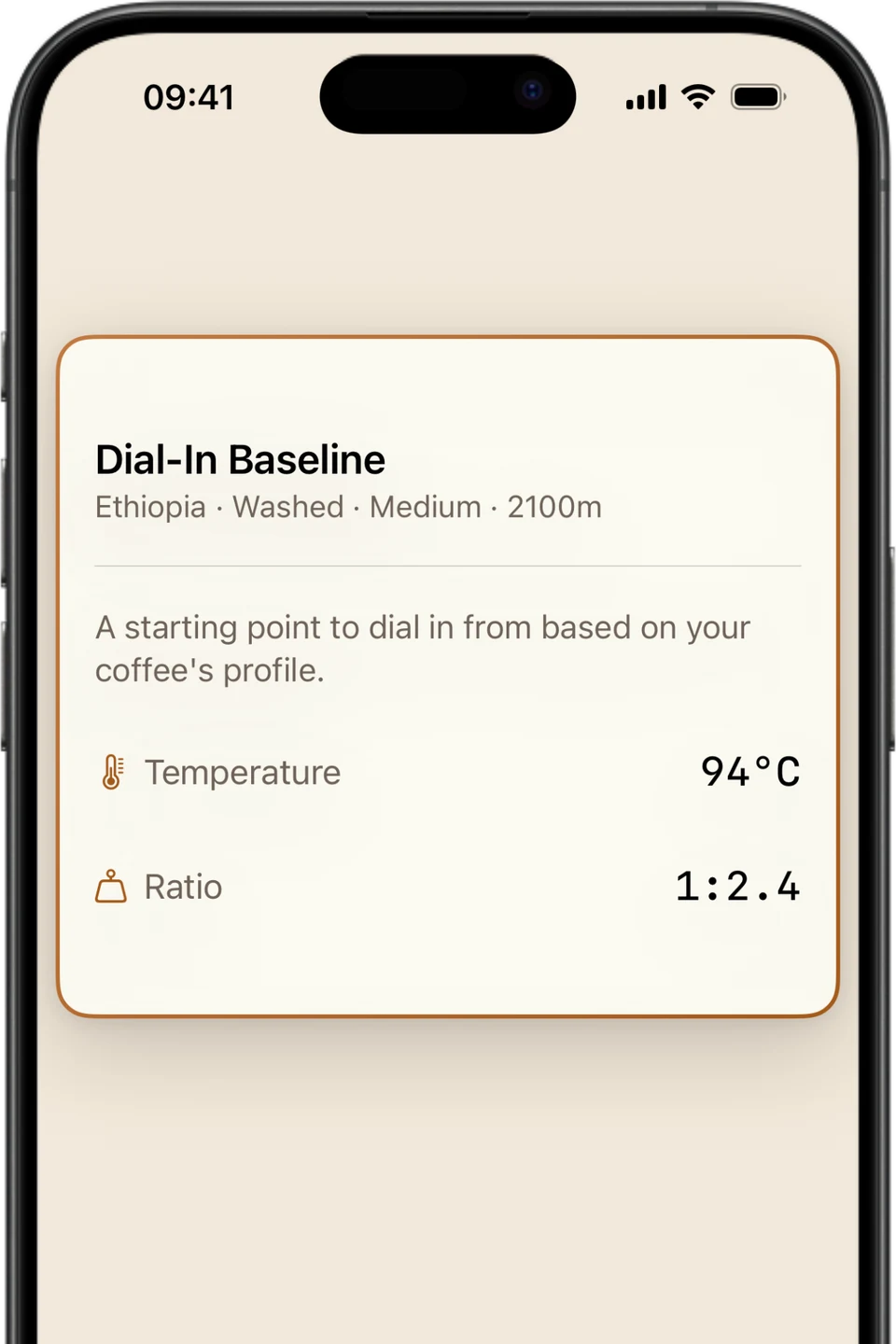
These ranges overlap by design. Roast labels are imprecise, and machine calibration, water, process and preference can shift the useful setting. Espresso Metrix uses the same broad direction, refined by the other bag details, for its Dial-In Baseline.
When temperature is a useful lever
- A dense light roast remains sharp after grind and ratio are close. A modest increase can raise extraction without adding puck resistance.
- A dark roast remains harsh across sensible grind settings. A modest decrease may soften roast-led bitterness.
- The shot is sour and bitter together. Check puck evenness before adjusting temperature.
Change one variable and compare
Move temperature in small increments, keep dose, yield and puck preparation stable, then log the actual result. A one-degree change can be noticeable when the machine and workflow are repeatable, but it is not guaranteed to outweigh normal shot variation. Use the comparison loop to decide whether the move improved the cup.
No PID? Make the routine repeatable
Without direct temperature control, consistency matters more than claiming an exact brew temperature. Use the same warm-up, flush and recovery routine, then note that workflow with the coffee so later shots remain comparable.